The Cultural Tutor
@culturaltutor
Don't fear the semicolon.
Here's how to use it: 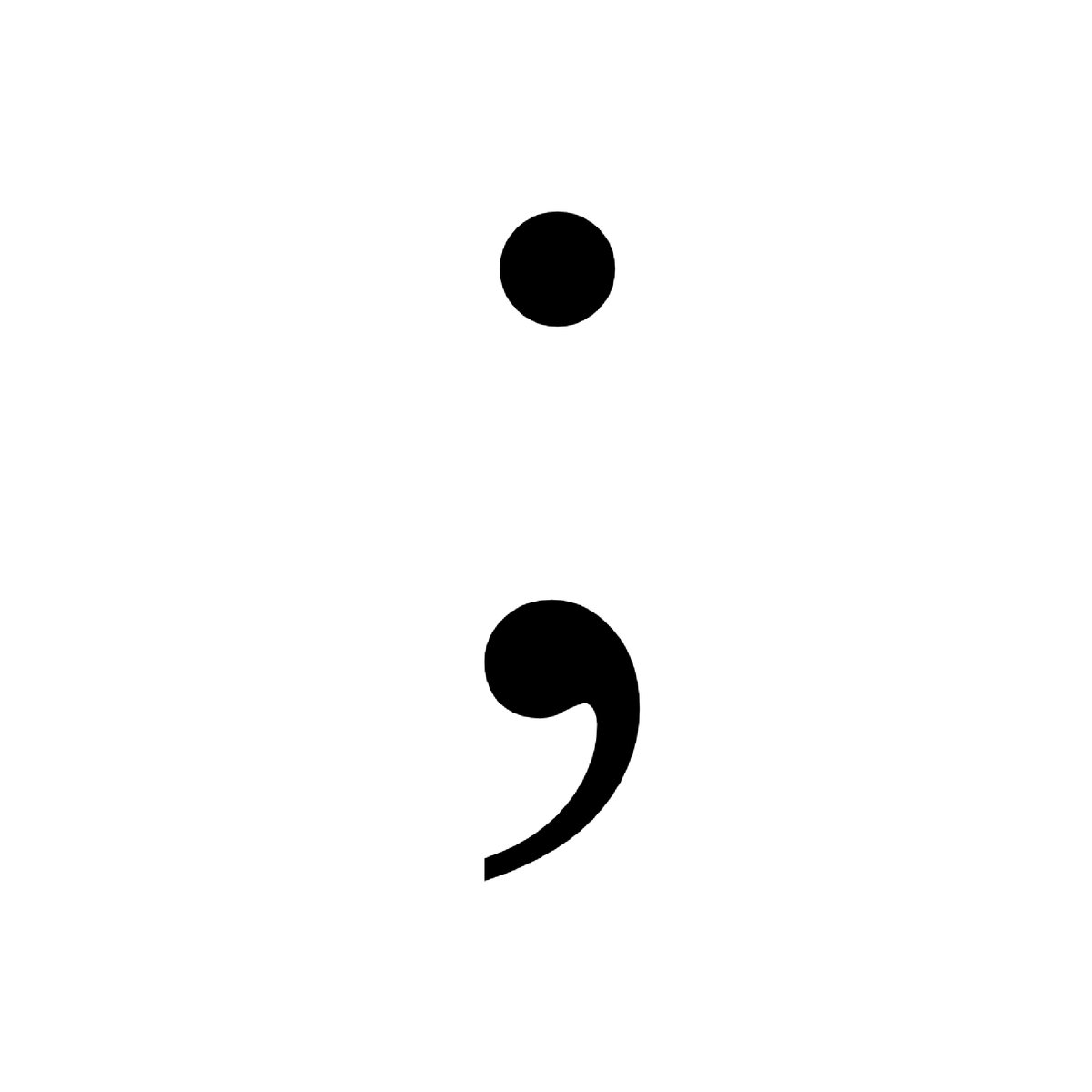
The semicolon is by far the most controversial, confusing, and dreaded of all punctuation marks. But it's a subtle and powerful tool which helps you to use language in a wholly different way.
The semicolon has two functions:
1. Lists
2. Connecting complete clauses 1. Lists
Have you ever had that problem when you're writing a list, separating each item with commas, but realised that the items themselves contain commas?
It's a mess.
Enter the semicolon, which can be used *instead* of commas in such a list. For example...
Some famous epic poems are: Dante's Divine Comedy; the Iliad and the Odyssey, both by Homer; the Epic of Gilgamesh, which is anonymous; and Orlando Furioso, written by Ludovico Ariosto.
The semicolon adds clarity. 2. Connecting Clauses
This is where the semicolon really shines. And think of it this way - the semicolon contains both a period and a comma because it's a mix between the two.
It doesn't have the definitiveness of the period, but it's more powerful than the comma. The semicolon is used to connect two complete, independent clauses. A complete clause is one which makes sense grammatically on its own.
Here's an example... -I will always be here for you. I mean that.
-I will always be here for you, and I mean that.
-I will always be here for you; I mean that. Using a comma requires the use of a conjunction, while the period makes the clauses too distinct.
A semicolon lets you associate two ideas or statements more closely than if they were separated by a period and more succinctly than with a comma plus conjunction. And it also adds some variety to the structure of your sentences and paragraphs.
Two clauses combined with a semicolon form a unique sentence of their own; that in turn gives more weight to the other alternatives for connecting or separating clauses. The semicolon adds a whole different texture to your writing, both in style & meaning.
One of the most beautiful and subtle tools in your linguistic arsenal.